You Think You Know Them — That's Exactly What They're Counting On
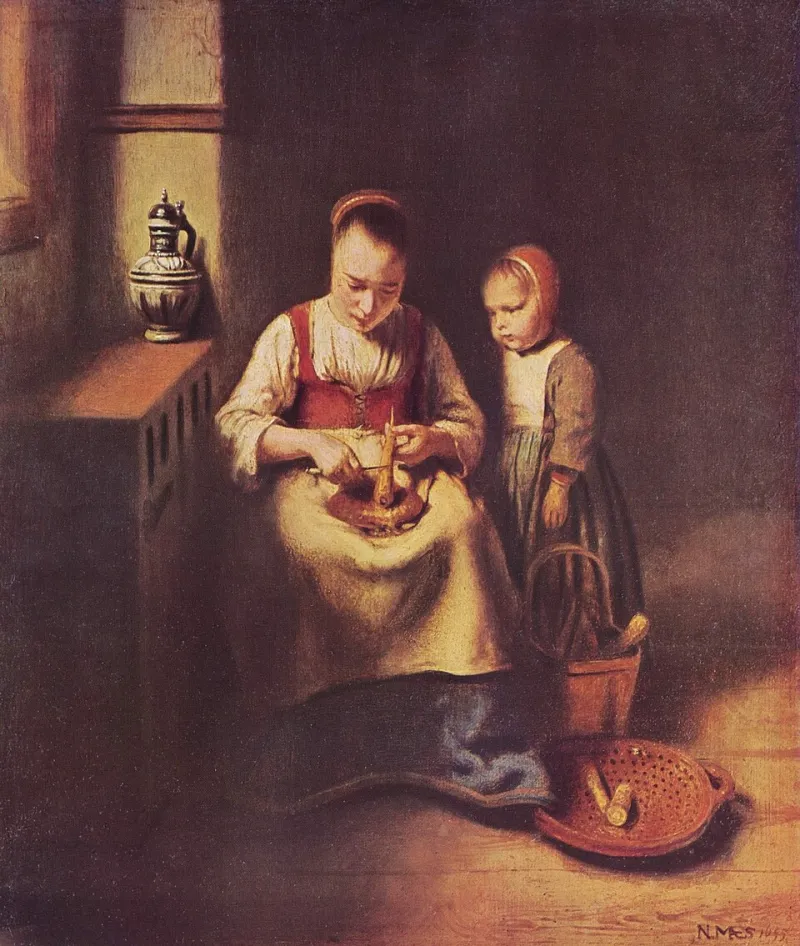
Photo: Nicolaes Maes, Public domain, via Wikimedia Commons
Let me describe someone you probably follow. They post consistently — maybe daily, maybe more. They share personal stuff: their apartment, their dog, their complicated feelings about something that happened this week. They respond to comments sometimes, at least enough that it feels like they might respond to yours. They've been through things publicly — a breakup, a health scare, a falling out with another creator — and you were there for it, in a way. You watched it happen. You cared.
You've never met them. You never will. But if someone asked you whether you know them, you'd hesitate before saying no.
That hesitation is worth a lot of money.
What Parasocial Actually Means (And Why It Matters Now)
The term "parasocial relationship" has been floating around pop psychology circles for a while, but it originally comes from a 1956 paper by sociologists Donald Horton and Richard Wohl. They were writing about television personalities — the way viewers developed one-sided emotional connections with talk show hosts and newscasters who felt familiar through repeated exposure.
The dynamic they described was relatively contained back then. You watched Johnny Carson a few nights a week. You liked him. But the medium kept a certain distance. There was a screen, a set, a production apparatus that reminded you, however subtly, that this was performance.
That distance is gone now. Or at least, it's been engineered away very deliberately.
TikTok, YouTube vlogs, Instagram Stories, Twitch streams — these formats are specifically designed to collapse the gap between creator and audience. The shaky vertical video shot in a bathroom. The unedited reaction. The "I wasn't going to post this but" caption. Every one of these is a technique, whether or not the creator is conscious of deploying it, that signals: this is real, this is me, you're seeing something unfiltered.
And our brains respond to that signal the same way they respond to actual intimacy. Because for most of human history, that level of access to someone's daily life meant actual intimacy. We didn't evolve a filter for parasocial performance at scale. We're not equipped for it.
The Micro-Influencer Upgrade
Here's what changed the game specifically: the rise of the micro-influencer.
Celebrity culture has always involved parasocial elements — people have been obsessed with movie stars and musicians for over a century. But traditional celebrity maintained structural distance. The gap between a fan and, say, Beyoncé is so enormous that most people don't genuinely confuse it for a relationship. The scale of fame itself creates a kind of protective clarity.
Micro-influencers — creators with followings in the tens of thousands rather than the millions — don't have that buffer. They're accessible in a way that feels qualitatively different. They might actually reply to your DM. They probably know what city a lot of their followers are in. They reference their audience by name sometimes, or with the kind of specific in-jokes that feel like shared history.
The intimacy isn't an illusion exactly — it's more like a partial truth scaled past the point where it can remain genuine. A creator with 80,000 followers cannot have a real relationship with all 80,000 of them. But each of those 80,000 people can have a real emotional response to that creator. The math doesn't balance, but the feelings are still real.
And real feelings, as any marketer will tell you, convert.
When the Bond Gets Used Against You
Most of the time, parasocial relationships in the creator economy are relatively benign. You follow someone, you enjoy their content, you maybe buy a product they recommend because you trust their taste. That's the whole system, more or less, functioning as designed.
But there's a darker version of this story, and it's been playing out in public with increasing frequency.
When creators face controversy — and eventually most of them do — the parasocial bond becomes a mobilization tool. The framing is almost always the same: I've been so open with you, I've let you into my life, and now these people are attacking me. Are you going to let that happen?
Audiences that have been cultivated to feel personal loyalty respond with personal loyalty. They show up in comment sections. They mass-report critics. They send messages — sometimes threatening ones — to people who've said something critical about the creator they feel protective of.
This isn't a fringe phenomenon. It's happened with beauty YouTubers, with fitness influencers, with gaming streamers, with political commentary creators across the ideological spectrum. The specific drama changes. The mechanism is identical.
The audience thinks they're defending a friend. They're actually functioning as an unpaid reputation management team for a business.
Are We Really Complicit?
Here's where it gets uncomfortable, because the honest answer is yes, kind of.
We click. We subscribe. We engage. We reward the content that makes us feel closest to the creator, which trains the algorithm and trains the creator to produce more of that content. The entire system runs on our participation, and we participate enthusiastically because the emotional return is real, even when the relationship isn't.
That doesn't mean we're suckers. It means we're human beings responding to human-shaped stimuli in a media environment that's been specifically optimized to trigger those responses. There's a difference between being manipulated and being at fault.
But awareness matters. Understanding that the intimacy is partially constructed — that the vulnerability is often a content strategy, that the "authentic" moment was probably filmed three times — doesn't have to kill the enjoyment. It just reframes it. You can appreciate a magic trick more, not less, when you understand the mechanics.
What Comes Next
The celebrity-fan relationship has been remade, and it's not going back. The old model — distant, aspirational, fundamentally unidirectional — doesn't work for the current media landscape. Audiences want access, and creators who provide it will continue to thrive.
But the question of where legitimate connection ends and exploitation begins is one the creator economy hasn't figured out. Probably because figuring it out would be financially inconvenient.
For the rest of us — the followers, the subscribers, the viewers — the move isn't cynicism. It's just a little more lucidity about what we're actually participating in. The person on your screen might be genuinely talented, genuinely funny, genuinely worth your time. They might even be a decent human being.
They are also, without exception, running a business. And you are the market.
Everything they share with you, everywhere you follow them, all at once across every platform — it's real and it's curated simultaneously. Holding both of those things in your head at the same time is the only honest way to engage with it.