What Even Is This? How Entertainment Lost the Plot on What It's Supposed to Be
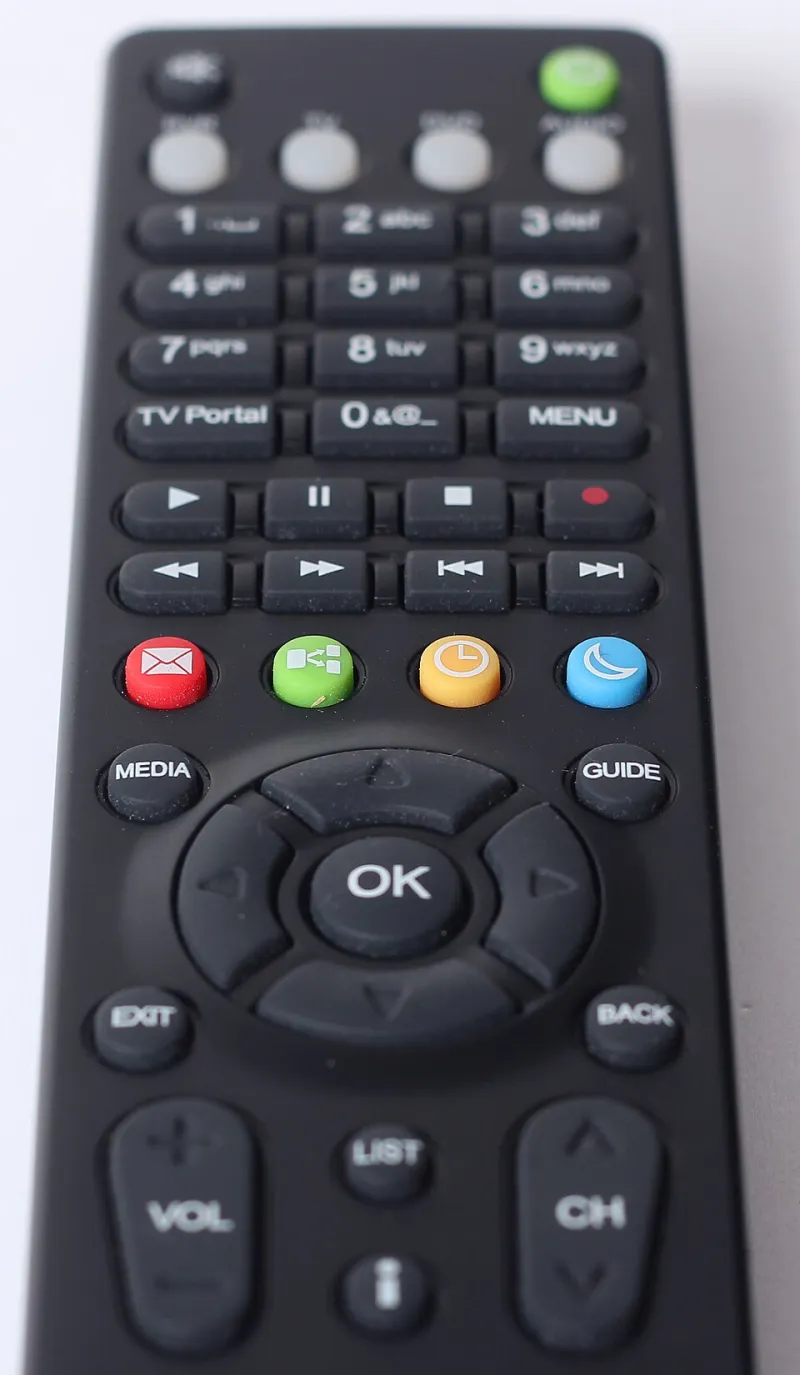
Photo: Dmitry Makeev, CC BY-SA 4.0, via Wikimedia Commons
Picture this: You sit down to watch something your friend described as "kind of a comedy but also it'll make you cry and there's a documentary aspect to it and also it's based on a TikTok trend that became a book deal." You nod along, pull it up, and forty minutes in you realize you genuinely cannot tell what genre you're watching — or whether genre even applies anymore.
Welcome to entertainment in 2024, where the categories have quietly stopped meaning anything and everyone is just kind of vibing through the chaos.
The Buffet That Broke the Menu
For most of entertainment history, categories served a real purpose. You walked into a video store — stay with me here — and you went to the Comedy section or the Drama section or the Horror section because you knew what kind of experience you were shopping for. Genre was a promise. A contract between creator and audience.
Streaming blew that up. Not immediately, and not intentionally, but thoroughly.
When you have thousands of titles competing for the same eyeballs on the same interface, the pressure to be everything becomes intense. A pure comedy might not pull in drama fans. A straightforward thriller might not convert the true crime crowd. So things start to blend. The comedy gets darker. The drama gets funnier. The documentary gets a narrative arc that feels like a scripted series. The scripted series starts incorporating real footage and real interviews.
None of these individual decisions are wrong. Some of them produce genuinely great work. But collectively, they've created an entertainment landscape where the menu has been replaced by an infinite, unlabeled buffet — and we're all just piling things on our plates without being sure what we're actually eating.
Games Are Shows Are Games
If you want a case study in genre collapse, look at the relationship between video games and television right now.
The Last of Us didn't just adapt a game — it created a massive new audience for a story that millions of people had already experienced as an interactive medium. Fallout did the same thing. These aren't just adaptations; they're translations between storytelling languages, and they're working well enough that the lines between "I'm playing this" and "I'm watching this" are getting genuinely blurry.
On the flip side, games themselves have gotten increasingly cinematic. Long cutscenes, motion-captured performances, branching dialogue systems that make players feel like they're directing a film. Some modern games are closer to interactive prestige TV than to what we traditionally think of as gaming.
So when someone tells you they spent the weekend with Red Dead Redemption 2, are they a gamer or a TV viewer? Does it matter? Probably not to them — but it matters a lot to the marketing departments, the award shows, and the critics trying to figure out what criteria to apply.
TikTok's Genre Problem
And then there's TikTok, which has essentially invented its own genre taxonomy that doesn't map cleanly onto anything that came before it.
A TikTok video might be: a comedy sketch, a personal essay, an advertisement, a piece of investigative journalism, a short film, a music video, a cooking tutorial, a political statement, or some combination of all of those things — in 90 seconds. Creators have gotten extraordinarily good at collapsing multiple formats into a single piece of content, and audiences have gotten good at consuming it without needing to categorize it.
But that content doesn't stay on TikTok. It spawns Reddit threads, YouTube deep-dives, podcast episodes, and — increasingly — actual films and TV shows. The Ratatouille musical that lived entirely on TikTok before becoming a ticketed streaming event. The BeReal aesthetic bleeding into scripted cinematography. The "documentary" format of a TikTok creator's day trip becoming indistinguishable from a travel show.
At some point, the pipeline runs in both directions, and you genuinely can't tell where the platform ends and the "real" entertainment begins.
Why This Actually Matters
Here's where some people will say: who cares? Good content is good content. Labels are for filing cabinets.
And sure, to a point. But genre collapse creates real friction in a few places that are worth paying attention to.
For creators, it's increasingly hard to know what you're making and for whom. The pressure to be cross-platform, cross-genre, and cross-demographic all at once is exhausting and often creatively counterproductive. Some of the flattest, most forgettable content of the last few years has come from projects that were clearly designed to be everything at once and ended up being nothing in particular.
For audiences, the infinite unlabeled buffet creates a low-grade but persistent sense of disorientation. There's research suggesting that choice overload is real — that having too many options, with too little information about what those options actually are, leads to less satisfaction even when the individual choices are good. The feeling that nothing quite lands the way it used to might not be about content quality. It might be about context collapse.
For the industry, genre ambiguity makes it harder to measure success, which makes it harder to greenlight things, which tends to push decisions toward safe, familiar territory — which is ironic, because safe and familiar is exactly what genre collapse is supposed to be moving us away from.
Finding the Signal in the Noise
None of this means entertainment is broken. Some of the most interesting work happening right now exists precisely because it refuses to fit neatly into a box. The best stuff often does.
But there's a difference between intentional genre-blending — where creators are making deliberate choices about tone, format, and audience — and the ambient genre collapse that happens when everyone's just trying to survive the content economy.
Maybe the move is to stop asking "what is this?" and start asking "what is this doing?" What experience is it creating? What does it want from you as a viewer, a player, a participant? Those questions work regardless of whether the thing you're watching is a comedy, a documentary, a game, a TikTok, or whatever new hybrid format gets invented next quarter.
Because one thing is certain: the categories aren't coming back. The menu is gone. We're all at the buffet now — might as well figure out how to eat.