Designed to Keep You Watching: The Dark Science Behind Your Binge Problem
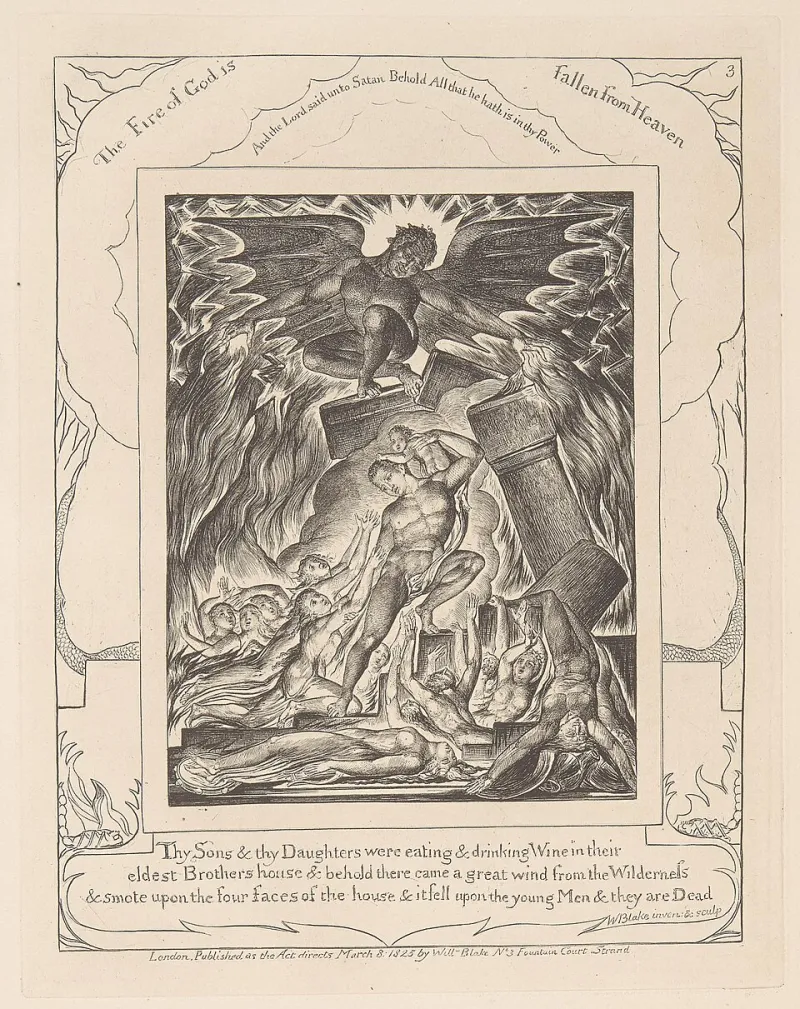
Photo: Unknown authorUnknown author, Public domain, via Wikimedia Commons
Let's be honest with ourselves for a second. How many times have you looked up from your phone or TV at 2 a.m., genuinely surprised that three hours just evaporated? You weren't planning to watch six episodes of anything. You had stuff to do. And yet — here we are.
That's not a personal failure. That's engineering.
The entertainment platforms you use every single day — Netflix, TikTok, YouTube, Hulu, take your pick — are not built around the idea of giving you a satisfying experience and sending you on your way. They're built around something far more valuable to their business model: keeping you in the room. And the tools they use to do it are borrowed directly from behavioral psychology, casino design, and decades of research into how the human brain processes reward.
You're not watching TV anymore. You're playing a slot machine that learned your tells.
The Dopamine Loop Nobody's Talking About
Here's the basic mechanics of it. Every time you finish an episode and the next one starts automatically — that 10-second countdown, the progress bar filling up — your brain is getting a small hit of dopamine. Not because you chose to watch more. Because the decision was made for you, and your brain registered it as a reward before you even consciously processed what happened.
Behavioral scientists call this "operant conditioning." The rest of us call it being played.
The autoplay feature alone, which Netflix introduced back in 2012, is estimated to account for a significant chunk of total viewing time across the platform. It wasn't added because users asked for it. It was added because internal testing showed it dramatically reduced what designers call "friction" — the moments where a viewer might actually stop and ask themselves whether they want to keep watching.
Friction, in platform design language, is the enemy. And they've gotten very, very good at eliminating it.
Infinite Scroll and the Illusion of Choice
Then there's the browse experience itself. The infinite scroll mechanic — that endless waterfall of thumbnails and titles that never hits a bottom — was originally designed for social media feeds. But streaming platforms adopted it for a specific reason: it creates the sensation of abundance while quietly removing the natural stopping points that might prompt you to log off.
A physical video store had a back wall. A DVD collection had a last disc. These were natural endpoints. Your brain knew how to handle them. But an interface that never ends? That's a different kind of problem for the human mind — one that tends to resolve itself by just... continuing to browse. Or continuing to watch.
Former UX designers who worked at major streaming companies have described the browse screen as intentionally overwhelming. The goal isn't to help you find something great. The goal is to keep you in a state of low-grade indecision long enough that you default to watching something — and that something is usually whatever the algorithm has already decided it wants you to see.
Cliffhangers Aren't New — But This Is Different
Writers have been using cliffhangers since Charles Dickens was publishing novels in serial installments. That's not the issue. The issue is what happens when the cliffhanger is no longer a creative choice made by a storyteller — it's a data-driven mandate handed down by a platform's engagement team.
Multiple showrunners have spoken publicly about pressure from streaming services to structure episodes in ways that optimize for autoplay continuation rates. Not story satisfaction. Not emotional resonance. Continuation rates. The metric that tells the platform whether you rolled into the next episode or — horror of horrors — closed the app.
This is where the experience of entertainment starts to diverge from the purpose of entertainment. A good story makes you feel something complete. A platform optimized for engagement makes you feel something unfinished — because unfinished keeps you watching.
The cliffhanger used to be a storytelling device. Now it's a retention strategy.
What Former Insiders Are Saying
The conversation around platform design ethics has gotten louder in recent years, partly because some of the people who built these systems are starting to push back on what they created.
Tristan Harris, a former Google design ethicist, has become one of the most prominent voices describing how tech and entertainment platforms deliberately exploit psychological vulnerabilities. His core argument — that these products are not neutral tools but persuasive technologies designed to capture and hold attention — has found an audience well beyond tech circles.
Others who've worked inside streaming platforms describe A/B testing environments where literally every element of the interface — thumbnail expressions, title card fonts, episode preview length — is tested against engagement metrics in real time. If a sad face on a thumbnail keeps people watching longer than a smiling one, the sad face wins. Not because it's more honest. Because it works.
This is the everything-everywhere-all-at-once reality of modern entertainment consumption: every platform, every interface, every autoplay countdown is doing something to you. The question is whether you want to know about it.
So What Do You Actually Do With This?
Knowing the game doesn't automatically make you immune to it. That's actually one of the more unsettling findings from behavioral research — awareness of manipulation doesn't reliably reduce its effectiveness. Your brain still wants the dopamine hit even when your prefrontal cortex is rolling its eyes.
But there are some practical moves worth considering. Turning off autoplay (yes, it's buried in settings, yes, that's intentional) forces your brain to make an actual decision between episodes. Setting a physical timer before you start watching gives you an external stopping point your brain can latch onto. And maybe most importantly — noticing the difference between how you feel during a binge and how you feel after one can start to reframe the experience.
Satisfied and hooked feel different. Learning to tell them apart is probably the most useful skill nobody's teaching you.
The platforms aren't going to change their design philosophy anytime soon. Engagement metrics pay the bills, and your attention is the product. But at least now you know what you're walking into every time you open the app and let the autoplay countdown begin.
One more episode, though. Right?